


Te Heriheri wetland
Toi Moana Bay of Plenty Regional Council and iwi collective Te Wahapū o Waihī have a shared vision of creating a ‘korowai around the Waihī Estuary’ – a protective buffer of wetlands designed to help restore the health of this highly degraded area.
The first step in achieving this vision was the purchase of a 109ha Cutwater Road farm next to the Waihī Estuary in June 2023. The land was subdivided – 79ha was sold to a neighbouring farmer, who has an interest in contributing to estuarine health, while the remaining 30ha has been converted into wetland.
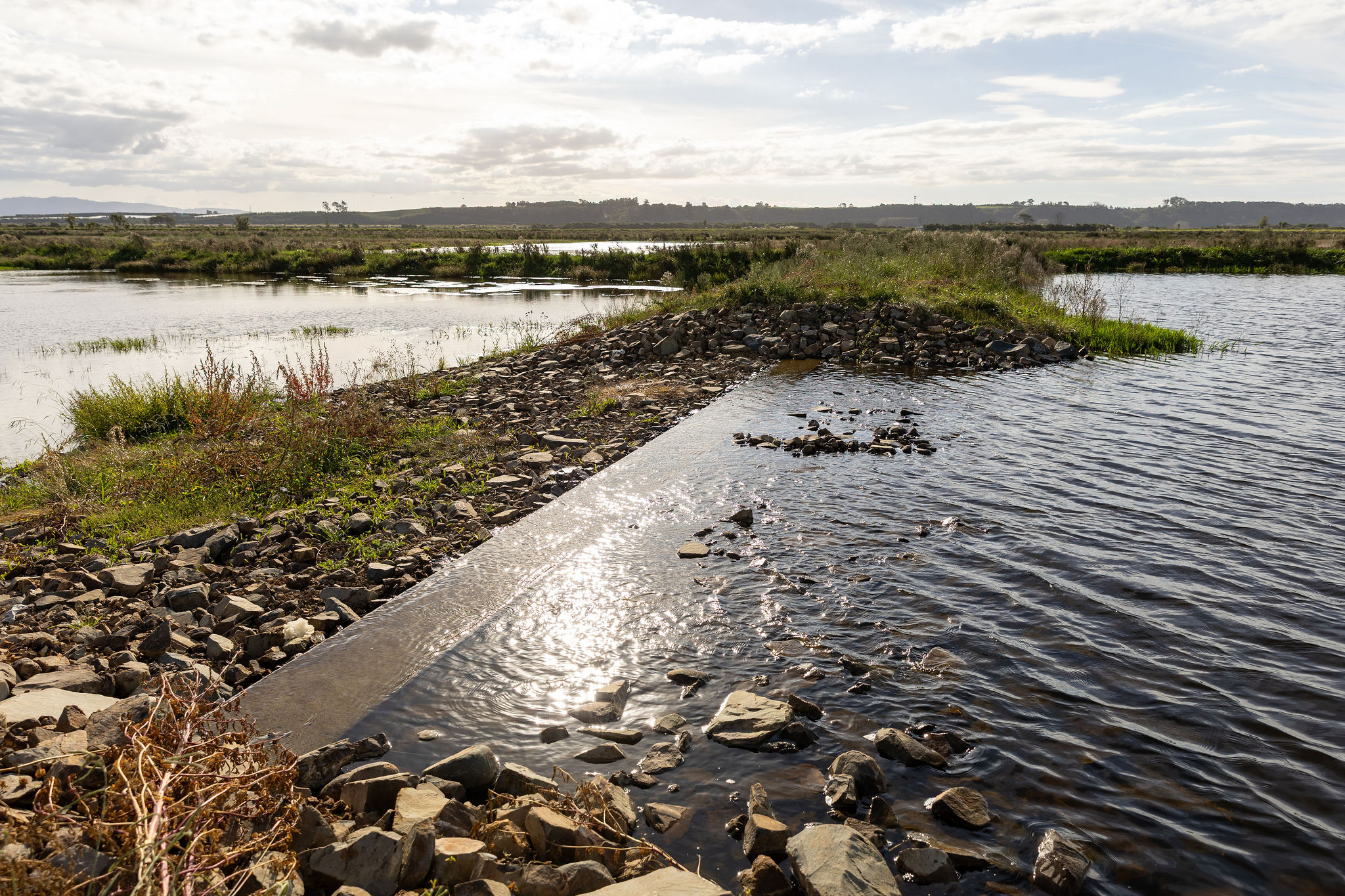
Te Heriheri wetland features a 27ha freshwater treatment wetland and 3ha tidal coastal wetland. Now complete, these wetlands will help improve water quality and biodiversity, contribute carbon storage that can help mitigate the effects of climate change, and support the cultural and recreational values of the area.
Initial purchase of the land was funded 50% by Regional Council and 50% from Te Wahapū o Waihī through the Ministry for the Environment’s Freshwater Improvement Fund.
The design for the wetland involves creating a 27ha freshwater treatment wetland and 3ha tidal coastal wetland. Wetlands are incredibly important ecosystems, and provide numerous environmental and cultural benefits. Once complete, these wetlands will help improve water quality and biodiversity, contribute to climate change mitigation and adaptation outcomes through carbon storage, and support the cultural and recreational values of the area.
Why are we doing this?
The Waihī Estuary has been identified as one of the most degraded in the country, due to decades of wetland drainage, river channelisation, land use change and contaminated runoff throughout the 35,000ha catchment.
Monitoring and modelling work shows it needs substantial reductions of 40-60% in sediment, nutrients and pathogens, plus in-estuary interventions, to achieve a state of moderate health.
Modelling of the area was done by DHI Water and Environment, who found that providing wider coastal wetland buffers was one of the key interventions required to improve estuarine health. By increasing the capacity of these buffers, this allows the tide to come in and flush the estuary, cleaning it of excess contaminants in the process.
Alongside this, reductions in freshwater-borne contaminants through implementation of good farming, forestry and horticultural practices are equally important. Regional Council staff are currently working with 37 landowners in the Waihī Estuary catchment on active Environmental Programmes and are in the process of negotiating with a further 25. In addition to the landowner work, there are numerous contributions being made by others, including community groups Maketū Ōngātoro Wetlands Society and Wai Kōkopu Inc.
What did we do?
In 2024, the Nature Conservancy Aotearoa completed blue carbon research on this site as part of a pilot programme. The results will provide baseline data to help us measure the project’s long-term ability to store carbon and contribute to climate mitigation.
Construction of Te Heriheri began in November 2025 and works included:
- Defishing the old drains – a process that involved catching tuna (eels) and relocating them to nearby canals.
- Digging new drains to improve water flow into the wetland.
- Creating freshwater and tidal wetland perimeter bunds.
- Earthworks to create channels that will help slow the flow of water through the wetland.
- Construction of a new electric pump station.
- Planting shallow water zones and the tidal wetland.
- Installing culverts and gravity outlets to connect wetlands to the Pukehina Canal and Pongakawa River.
- Installing rock rip-rap channel to provide greater capacity, and allow the tide to come in and flush the estuary.
News and upates

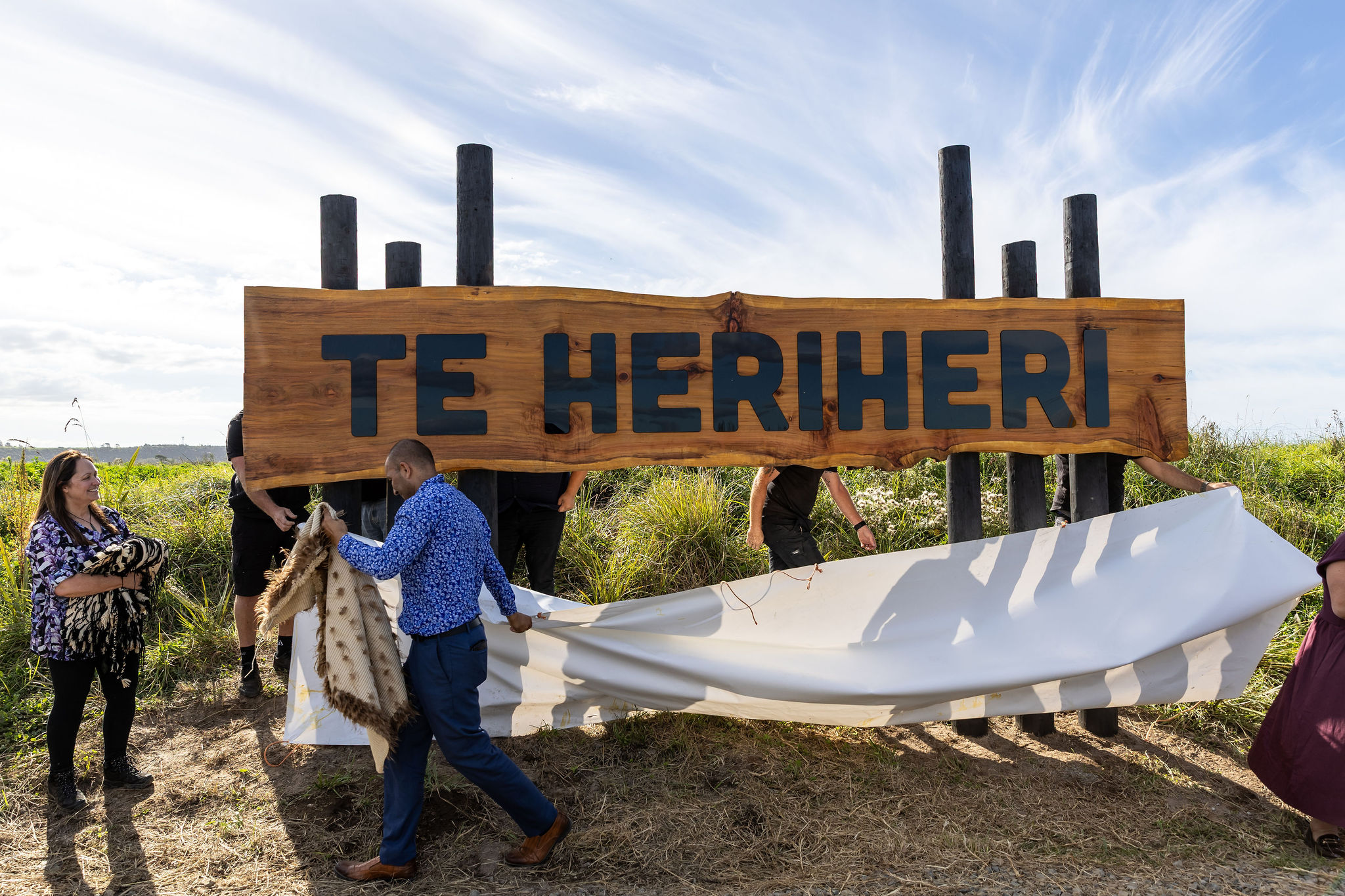
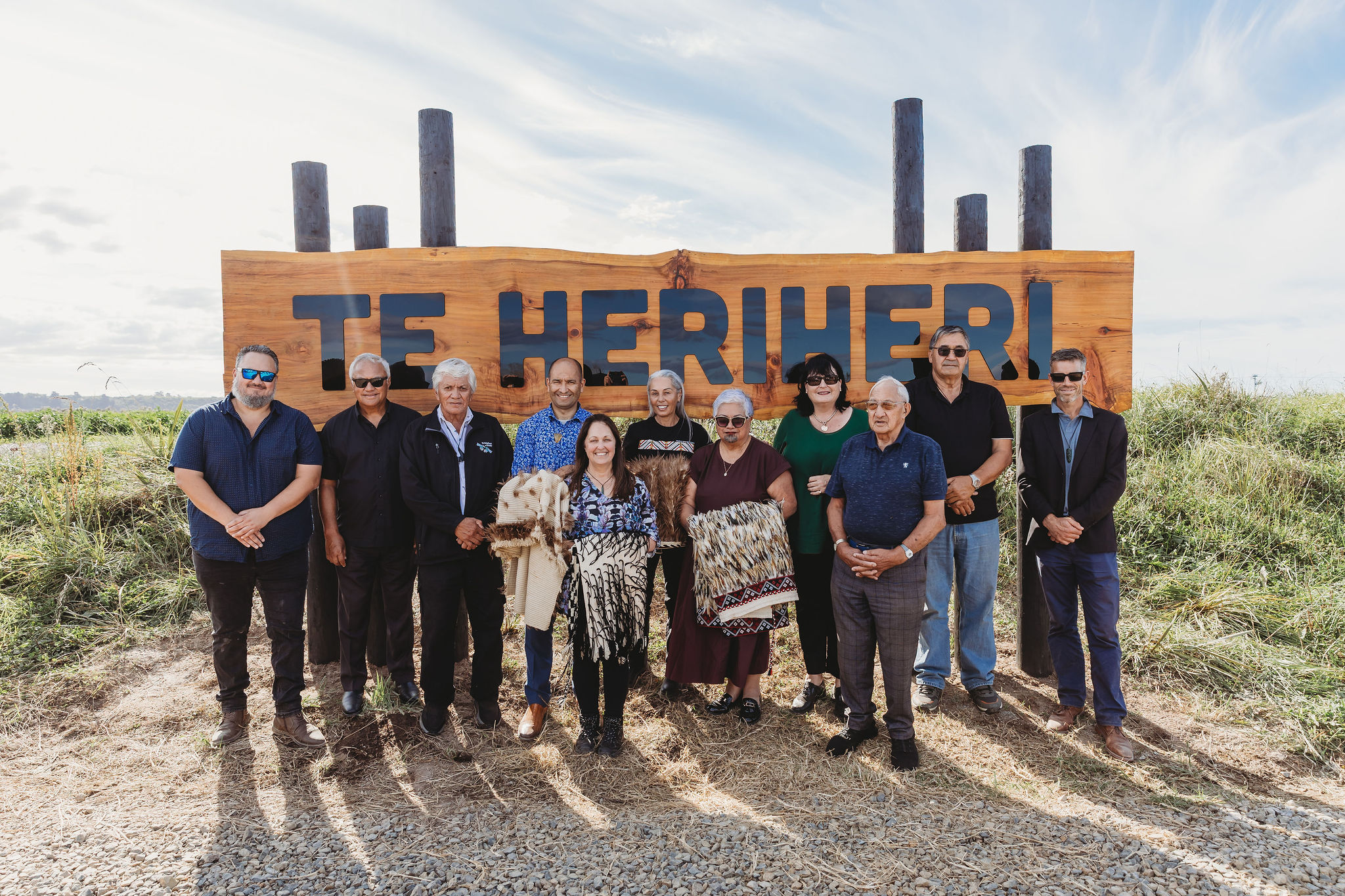
After many decades as a working farm and 18 months of construction, water is once again flowing through Te Heriheri Wetland (formerly known as the Cutwater Road Wetland), signalling the land’s transformation back to its original state.


Something special happens when a community comes together. When individuals unite, they bring diverse skills, perspectives and resources that can drive remarkable achievements.
The Cutwater Road wetland is the perfect example of this – this one-of-a-kind project to improve water quality and biodiversity sees many communities from different backgrounds coming together for the good of the Waihī Estuary.


Work is going swimmingly down at the Cutwater Road wetland in Pukehina.


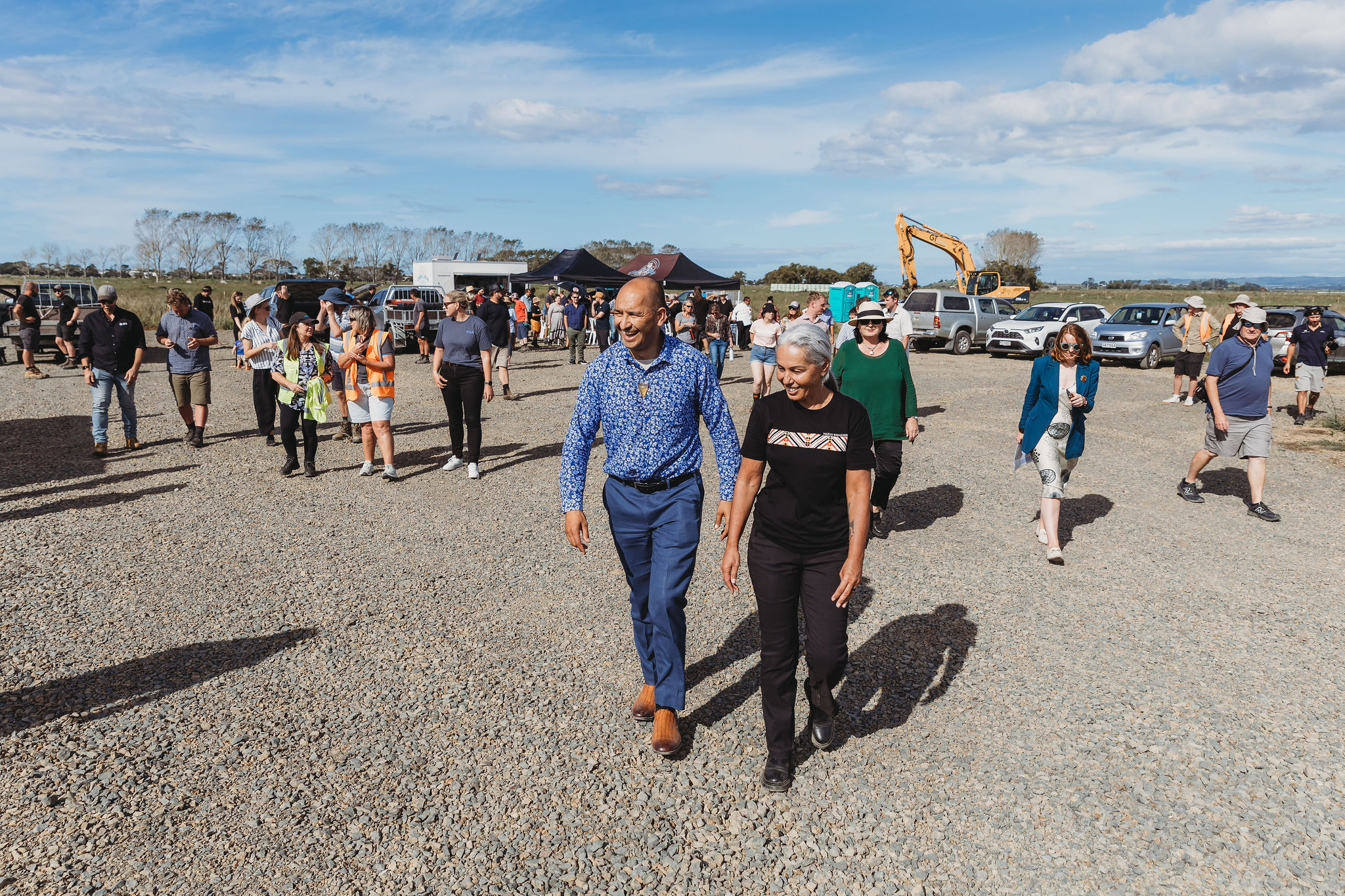
On Tuesday November 26, project partners Toi Moana Bay of Plenty Regional Council and iwi collective Te Wahapū o Waihī officially broke ground on a first-of-its-kind wetland bordering the Waihī Estuary.

To avert the worst of the climate crisis we need to reduce our emissions. One way is to phase out fossil fuels, to leave forms of carbon like oil and gas locked up in the ground. But we can also look at ways to lock up more carbon, long term. And some options for this are in our oceans.
Toi Moana Bay of Plenty Regional Council and iwi collective Te Wahapū o Waihī have partnered to return 30ha of low-lying farmland to coastal wetland in an effort to improve the ecological health of Waihī Estuary.