


Kung fu science
When he’s not performing outrageous martial arts feats, James Dare specialises in something entirely different. Meet the water quality scientist tasked with answering the big questions.
James Dare has a great party trick, although he’s only done it once and it wasn’t his idea – it was a directive from a kung fu grandmaster.
“He got me to lie shirtless on a bed of nails,” James says casually, “and then he hit me in the stomach with a sledgehammer.”
The stunt was performed at a showcase dinner in Singapore after a week of intense training for senior Nam Wah Pai kung fu instructors. It’s an anecdote that provokes a stunned silence, followed by a flood of questions.
James has made a career out of answering questions, usually to do with science rather than martial arts.
“My role is all about trying to answer the big questions with regard to water quality across the region,” he says, shifting his enthusiasm from kung fu to his day job.
When he’s not performing outrageous martial arts feats, he specialises in water quality, working as an environmental scientist at Bay of Plenty Regional Council.
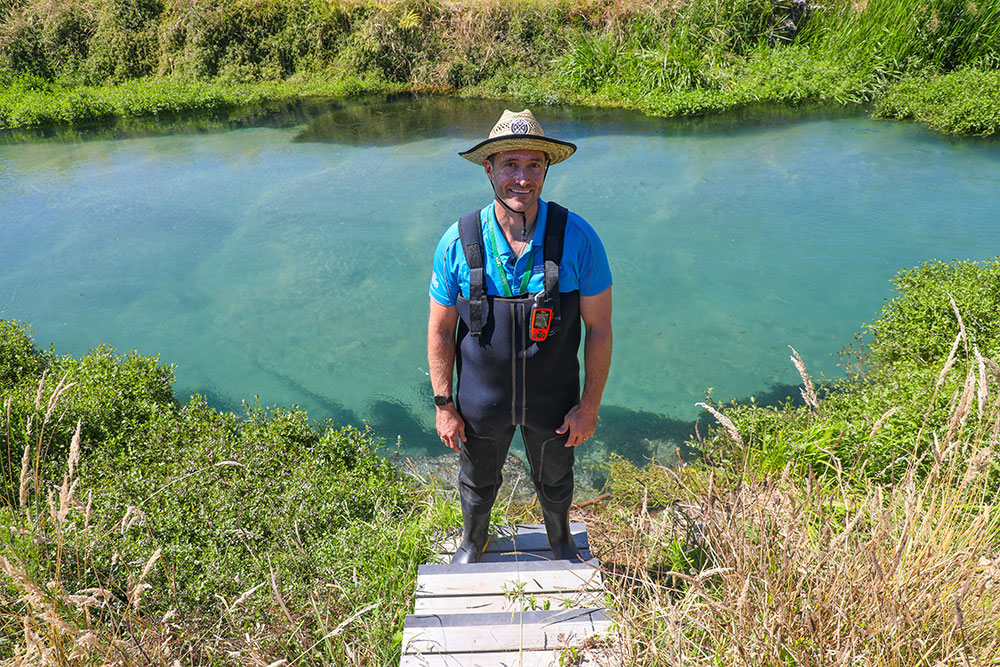
“Everything people do on the land affects the things people care about in the water,” he says, citing algae blooms and sediment build-up as some of the more noticeable effects of human activity.
“The aim is to find the right balance that will allow us to maintain a sustainable relationship with our environment.”
That word ‘balance’ comes up a lot, whether he’s discussing his work as a scientist or his approach to martial arts.
He discovered Nam Wah Pai kung fu when he was studying for his Masters in environmental science. He had previously played hockey at a high level and was looking for a physical outlet. There was no hockey turf where he was living at the time, but there was a Nam Wah Pai club.
“I just walked in,” he says. “I became enthralled with the culture, the technique and the mental conditioning. I remember going to my first national tournament and watching these black belts breaking bricks and coconuts with their bare hands, and I thought, ‘I have to learn how to do that’.
“The physical and mental discipline also helped support my academic pursuits at the time. It was like the perfect balance.”
He grew up in Plimmerton with unlimited access to the beach and the estuary. Today, when he talks about scientific field work, he still calls it ‘the fun stuff’.
“I loved the fun stuff early in my career,” he says. “Gumboots and estuaries. Doing coastal ecology at NIWA: that was some of the most amazing field work I’ve ever done, watching the sun come up at 5am in a little bay in Auckland. It was my introduction to environmental work, an absolute dream at that time.”
These days it’s other people doing most of the fun stuff and sending the water quality results back to James. (“They’re actually wearing waders, not gumboots,” he clarifies later, intent on accuracy.)
The numbers that come in from the field are meaningless in isolation. James says his job is to put the results into context with those big questions: “Like, what will happen as the climate changes in the future? Are any of our waterways degrading? How do we restore them? How do we ensure that rivers, lakes and estuaries retain the things we value?”
In pursuit of the answers, he works closely with other scientists in his team.
“My colleagues may specialise in ecology, groundwater, or coastal dynamics. I specialise in water quality, and I need their input to get a complete picture.
“When you think about the way that water flows down from the hills and ends up in coastal areas, you need experts in everything: Water quality, river ecology, ground water, estuaries and the coast. It’s the whole mountain-to-sea approach.”
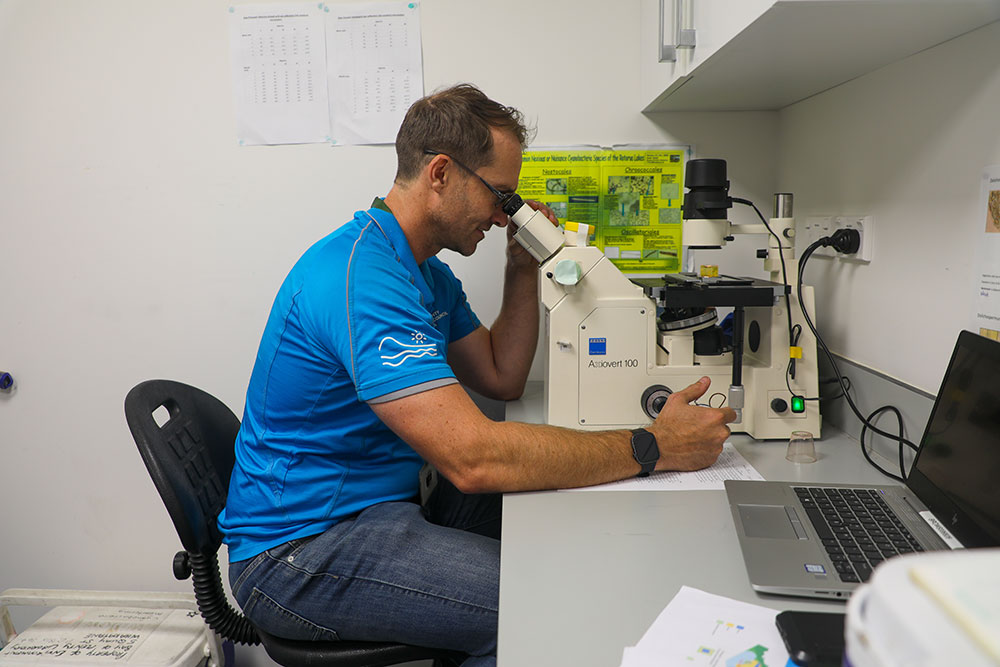
Despite spending less time in the field, he loves the detective work that his job requires.
“I like to zoom in, look at the results, really dig into the data to identify where excess nutrients are coming from.
“A natural system is in balance, but humans come along and the system gets overstimulated. If we understand how things are changing over time, we can adjust our land management approach into the future.”
He has developed his own computer models to generate better results, spending much of his time in a statistical programming environment, in what he describes as a big, open-source world where scientists share and learn from other scientists.
He is also working part-time on a PhD, the crux of which he says is to better understand the ‘dynamics of contaminants’. It’s all in service of providing better information to the council’s Land Management team who are out on the ground talking with farmers and landowners.
“There’s no one-size-fits all with people or nature. Every catchment is different. When we understand what’s going on in a specific area, we can have more efficient, targeted management advice for the people who live and work on that land,” he says.
James is often called on to present and speak to community groups, and this is where we circle back, again, to kung fu.
“Martial arts helped me develop my public speaking confidence,” he says.
“When you’re by yourself on stage, swinging nunchucks around for your set routine, you need a particular focus. It’s a similar focus to explaining science to a community.
“It’s given me a lot of self belief. You’ll think, ‘There’s no way I can do that’. But chip away at it, and suddenly you’re breaking bricks on a stage.
“Explaining science to a community group is not so hard after that.”