Skip to main content Skip to footer
Menu
Rotorua panorama Rotorua panorama

Rotorua air quality

Rotorua has historically had some of the worst winter air quality in Aotearoa New Zealand, largely due to smoke from wood burners. A decade of education, alongside a ban on older-style burners in 2020, has made a big difference—but thousands of non-compliant burners remain in use. 

diagramWhy air quality matters

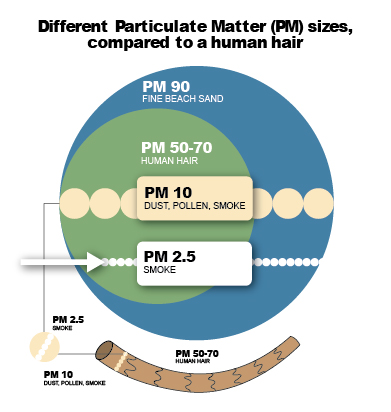
All fires produce smoke, which contains tiny particles that can be harmful to human health. The finer, inhalable particles, referred to as PM2.5 (with diameters that are generally 2.5 micrometres and smaller), have the most serious health impact as they can penetrate deep into the lungs and enter the bloodstream. These particles pose the highest risk to children, older adults, and people with respiratory or heart conditions.  

The World Health Organisation recognises air pollution as the single biggest environmental threat to human health. 

Our journey so far

We monitor and manage air pollution to meet the National Environmental Standards for Air Quality, which set minimum health protection levels. In Rotorua this monitoring is focused on meeting the standard for PM₁₀ (particles with diameters that are generally 10 micrometres). There is currently no standard for the finer particulate matter called PM2.5, although this is expected to change in the coming years.    

In 2005, an air quality management zone (or Airshed) was established for Rotorua, leading to targeted monitoring and rules in the Air Chapter of the Regional Natural Resources Plan. The Rotorua Air Quality Control Bylaw followed, restricting new burner installations, banning indoor open fires, and it requires non-compliant burners to be removed before a property changes ownership.   

For years, this monitoring showed that Rotorua struggled with poor air quality over winter, primarily due to wood burner emissions being trapped by the city’s unique topography. Numerous exceedances of the national standards for PM₁₀ were recorded at the Edmond Road monitor (shown below).   

Thanks to community action and cleaner heating choices, we’ve seen major progress. This improvement has come through education, incentives, and enforcement.  

make the switch graphic

What’s next?  

Despite progress, smoke from thousands of wood burners still affects Rotorua’s air quality over winter. While past efforts have focused on PM₁₀, new evidence shows PM2.5 is even more harmful—and makes up 80–90% of wood smoke. Recent monitoring shows Rotorua may not meet proposed PM2.5 national standards, meaning further pollution reduction measures are likely.  

There is no safe level of air pollution. The best way to protect your whānau is to reduce or avoid burning wood.   

To help keep people safe, over winter, we use infrared camera technology to help detect illegal wood burner use. You can check if your burner is legal on this flow chart

What you can do  

Pollution Hotline  

Smell excessive smoke or suspect a burner is non-compliant?   
Call our 24/7 Pollution Hotline: 0800 884 883  

Rotorua Airshed  

The Rotorua Airshed is an air quality management zone that allows us to monitor air quality and apply rules to reduce pollution.

View an interactive map of the Rotorua Airshed

The rules

Regional Council controls the discharge to air from a burner. The relevant rules are in the Air chapter of the Regional Natural Resources Plan. 

Rotorua Lakes Council controls the actual burners themselves. The relevant rules are in the Rotorua Air Quality Bylaw

The combination of both types of rules was needed to best tackle the air quality problem in Rotorua. 

Summary of the main rules from both regulations 

Non-compliant Burners 

Woodburners installed before 1 September 2005 and all coal burners, multi-fuel burners, indoor open fires, potbelly stoves, coal or wood ranges/cookers, chip heaters, Marshall heaters regardless of their installation date. 

Point of Sale Rule 

Before the sale of any property is completed, any non-compliant burners must be removed or replaced with compliant heating. It is the vendor’s responsibility to remove or replace non-compliant solid fuel burners in the property. Indoor open fires must be made inoperable. 

You must complete a Point of Sale Compliance Form (PDF 769.35KB) , attach before and after photos and submit the form to Bay of Plenty Regional Council regardless of which option you opt for (remove only OR remove and replace). This must all be done before the property title transfers to the new owner. 

A dispensation from the Bylaw Point of Sale rule will only be granted in exceptional circumstances. There is a $200 application fee. Dispensation application forms are only available upon request. 

New Burner Rules 

Only woodburners that have an emission rate of no more than 0.60g/kg and a thermal efficiency of no less than 65%, and are on the Ministry for the Environment (MfE) Authorised wood burners list can be installed in the Rotorua Airshed. 

You can only install a woodburner if you are replacing an existing wood, coal or multifuel burner in the same house and Rotorua Lakes Council issued the old burner a permit or building consent. If you are purchasing a house and the vendor removes an existing burner but does not replace it before the sale, you will not be able to install a new burner later, unless you get a resource consent.  

Offset Rule 

If you want to install a woodburner, but do not have an existing burner in your house to replace, or the existing burner was not issued a permit/consent, you will need to get resource consent to do so. In order for a consent to be granted, you will need to find an existing solid fuel burner in another house in the Airshed to remove, to offset the emissions from your proposed new woodburner. The offset burner must be operable and Rotorua Lakes Council needs to have issued it a solid fuel burner permit or building consent. 

For any queries about the resource consent requirements, please contact the Consents Duty Planner on 0800 884 880. 

Useful documents: 

Make the switch to cleaner heating

We offer some funding to help Rotorua homeowners remove or replace illegal burners with cleaner heating options. If you're unsure if your fireplace is compliant, or want to apply for support, get in touch with us. Terms and conditions apply.  

Financial assistance for replacement heating, insulation, double-glazing and solar is available from:

  • The Energy Efficiency & Conservation Authority (EECA) – insulation and heating grants are available through their Warmer Kiwi Homes programme
  • Banks – some banks offer interest free or low interest loans for replacement heating and other healthy home improvements including insulation and double glazing.

Free removal process   

We offer funding to help homeowners in the Rotorua Airshed replace or remove old wood burners that are illegal to use with cleaner heating options. If you have a fireplace and are not sure if it is legal to use, or would like more information, please get in touch with us. Terms and Conditions apply.  

Rotorua Air Quality Action Plan  

First developed in 2008, the Rotorua Air Quality Action Plan outlines steps to improve air quality and meet PM₁₀ standards.   

The Plan takes a broad approach, covering:  

  • reducing and restricting domestic emissions  
  • reducing industrial emissions  
  • promoting the use of dry wood  
  • raising awareness about air quality issues   
  • supporting infrastructure development.  

With new air quality limits coming, an updated plan will be needed to help Rotorua meet future standards and protect community health.  

Better burning

Dry firewood burns better and hotter than wet wood, so provides more heat for your home. Burning dry wood also creates less smoke and pollution.  

Dry firewood burns better and hotter than wet wood, so provides more heat for your home. Burning dry wood also creates less smoke and pollution.

Easy ways for you to make sure your firewood is ready to burn:

Stack it well

Split your wood to a maximum thickness of 15cm and stack it loosely to let air flow though the pile.

Also store it off the ground to protect it from ground moisture – a wooden pallet is ideal.

Cover it

Store your firewood in a sheltered place where it is protected from the weather.

This can be as simple as covering your wood pile with a tarpaulin.

Let it dry

Firewood takes about 12 months to dry.

Whether you source your own or buy it, make sure you get your firewood early.

How to tell if your wood is dry:

  • Dry wood has cracks in the end
  • It weighs less than wet wood
  • When hit together two dry pieces of wood should make a noise like a loud hollow crack.

Regional Council has a wood moisture tester in the Rotorua Office. Bring a piece of your firewood in for testing if you are unsure if it is dry enough. Dry wood has a moisture content of less than 25%.

Healthy homes

To really make your home warmer, drier and healthier to live in, it is important to think about how insulation, heating, ventilation and tackling dampness work together as a system.  

To really make your home warmer, drier and healthier to live in, it is important to think about how insulation, heating, ventilation and tackling dampness work together as a system. By thinking of each element as one piece of the whole puzzle, it’s easier to see how getting each part sorted contributes to a more efficient, comfortable and healthy living environment.

Recommendations include:

  • Ensuring the roof and underfloor are sufficiently insulated, as this is where most heat is lost
  • Air your house regularly - open windows to allow fresh air to circulate
  • Using bathroom and kitchen extractor fans
  • Make sure curtains and blinds form a good seal around your windows – the BRANZ guide Understanding the magic of curtains provides more detail
  • Consider double glazing

The Asthma & Respiratory Foundation NZ has more information about making sure your home is warm, dry and healthy in their Healthy Homes Guide.

Hot Swap

The Rotorua Hot Swap Scheme ended in June 2021.

Hot Swap loans were available in the Rotorua Airshed from 2010 to help the community replace their non-compliant burners with cleaner, more efficient heating methods, such as ultra-low emission burners and heat pumps.

The Rotorua Hot Swap Scheme ended on 31 June 2021.

Hot Swap loan information

Interest Rates

Under the Rotorua Hot Swap Scheme, a single interest rate is used for the whole term of the loan, set at the time of the loan being issued. Various interest rates have been applied and different loan limits have been applied within the Scheme over time to different heating appliances or insulation loans.

Interest rates may be 6%, 3% or interest free depending on the chosen heating appliance. Grants have also been funded by the Council to reduce loan amounts.

The combined total of the loan and total interest is divided into a set annual amount to be collected via rates.

Default fees/Default interest charges

Regional Council does not expressly charge default fees or default interest charges, however, penalties can be applied to late rate payments (for instalments and for the previous year). Rates are currently collected on behalf of Regional Council by each local authority and penalties range from 3% to 10% of the outstanding amount.

Issues or complaints with loan agreements

If any person has a problem with a Rotorua Hot Swap Scheme loan agreement please contact the Bay of Plenty Regional Council toll-free between the hours of 8.30 am to 5 pm, Monday to Friday on 0800 884 880.

Regional Council is registered as a financial services provider (FSP number FSP1001835) and is a member of an approved dispute resolution scheme (Financial Services Complaints Ltd).

Re-payment Difficulties

Any Rotorua Hot Swap Scheme ratepayer who finds themselves in a position where repayments are difficult should contact Regional Council as soon as possible to discuss options.

Changes to Loan Agreements

Interest rates and repayment arrangements are not changed by Council. Rotorua Hot Swap Scheme ratepayers can decide to pay a lump sum and the interest is reduced in accordance with the lump sum.

If a property is sold during the life of a loan agreement the loan must be re-paid. If there are circumstances where a request is made for a person to take over the loan, Regional Council will consider the request. At Council’s discretion a new loan agreement may be provided.

This information is provided in accordance with the Credit Contracts and Consumer Finance Act 2003.

Any Rotorua Hot Swap Scheme ratepayer can request detailed information about their loan agreement.