Most applications to take more water than the permitted limits are assessed case by case, as a discretionary activity under the Regional Natural Resource Plan (Rule 43).
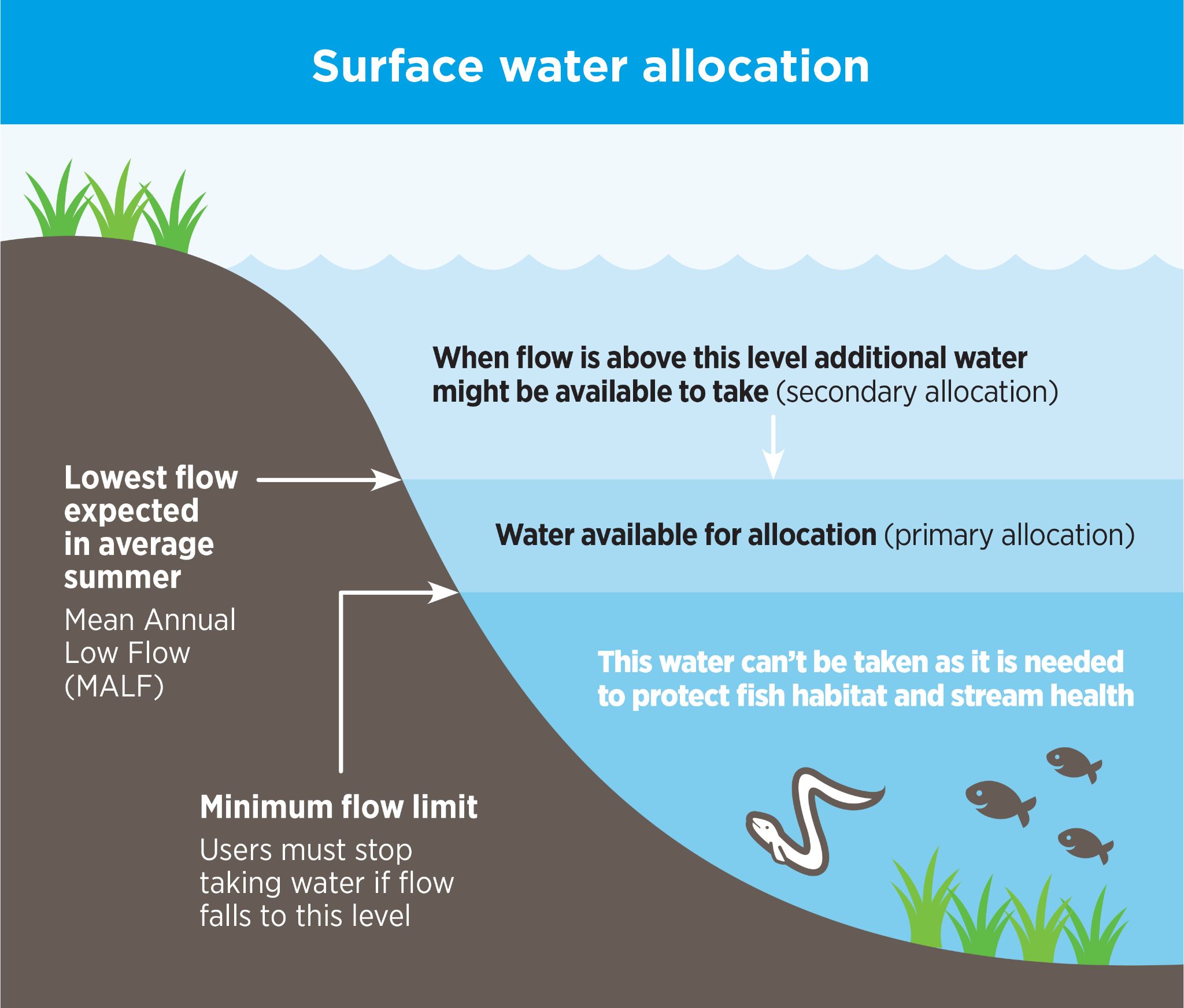
Under the current rules, a conservative default water allocation limit is used to determine how much water is available to be taken from a stream or river (Table 13, Policy 66). The rules also allow council to consider an alternative allocation limit, where the applicant provides supporting scientific information (Policy 68).
Since the Regional Plan was developed more than 20 years ago, council has gathered more information. This information can be used to help inform decision-making on resource consent applications.
There are two main parts to determining whether water is available to take from a stream or river:
- estimating how much water is flowing in the stream or river, and
- determining how much of that water can be taken while maintaining ecosystem health.
Estimating flow in streams and rivers
We operate 33 continuous stream-gauging sites across the region that measure and report stream flows. Over time, this data (along with additional flow measurements collected on an occasional basis from other streams) builds a picture of the range and pattern of stream flows, allowing us to identify typical low-flows.
Low-flow measures used
The Regional Plan refers to flow based on the Q5 7-day low flow.
Our proposed future approach follows the lead of key national science agencies and other councils by using a different low flow measure: Mean Annual Low Flow (or MALF).
- MALF represents the lowest flow expected in an average dry year.
- The flow at MALF is higher than Q5 7-day low flow, because Q5 7-day low flow represents the lowest flow expected in a 5 year period rather than average year that is MALF.
As with flood estimates (such as a 1-in-100-year flood), flows lower than MALF or Q5 7-day low flow can occur more or less frequently than expected.
We are developing a minimum flow management map that groups together streams with similar flow characteristics. This will allow us to manage the taking of water to avoid causing a breach of the minimum flow across all streams in our region based on a continuous gauging site within each group.